Build library
Everything in the build library
Thirty-two entries covering home hydroponic and soilless systems: build manuals with parts lists and assembly sequences, stage-by-stage nutrient charts, and maintenance calendars. Entries go live on their publish dates.
Build manual
- Build manualKratky still waterLeafy greensBeginner
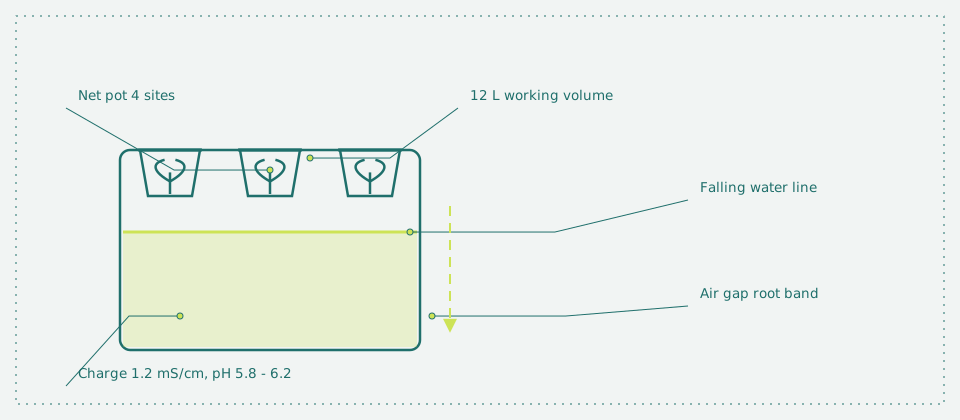
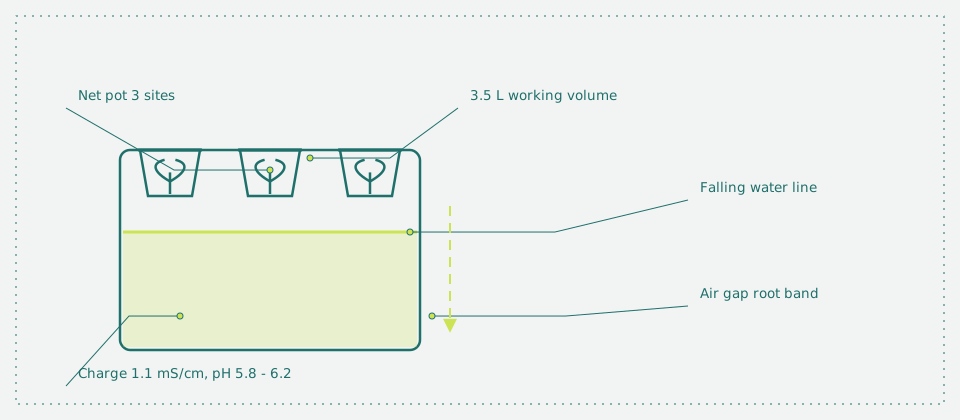
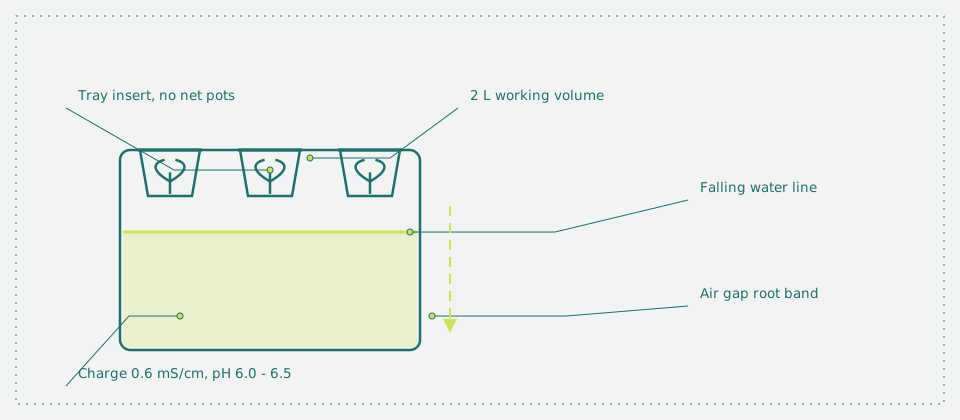
Kratky Lettuce Bucket: a 12 L no-pump system that runs 35 days on one charge
The Kratky method grows lettuce in a bucket with no pump, no air stone and no electricity beyond a light. You charge the reservoir once, set the pots, and let the water level fall. This b…
Open the manual → - Build manualDeep water cultureHerbsBeginner
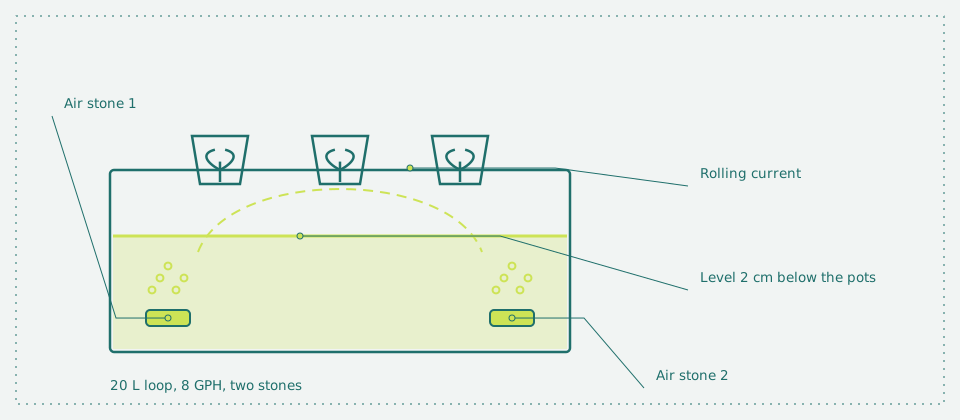
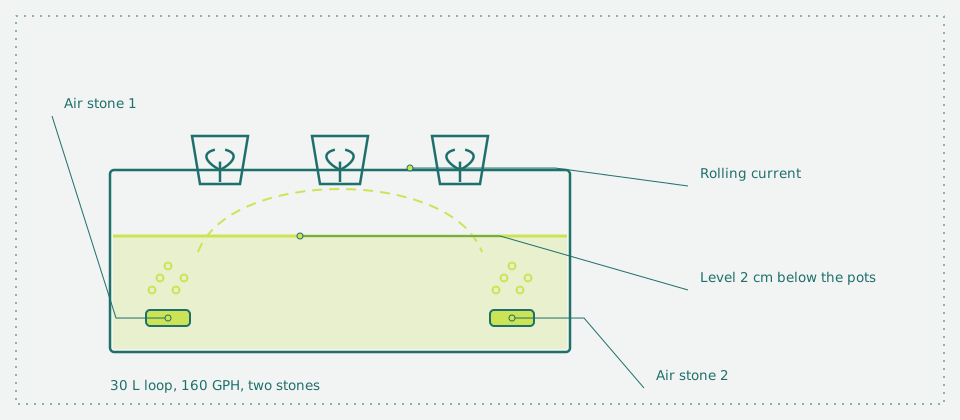
DWC Basil Tote: 20 L, six plants, and a pump that quietly decides everything
Deep water culture is the most forgiving active system for herbs, and basil is the crop that shows it off. This 20 L tote build runs six plants through seven weeks of continuous cutting.…
Open the manual → - Build manualNutrient film techniqueLeafy greensIntermediate
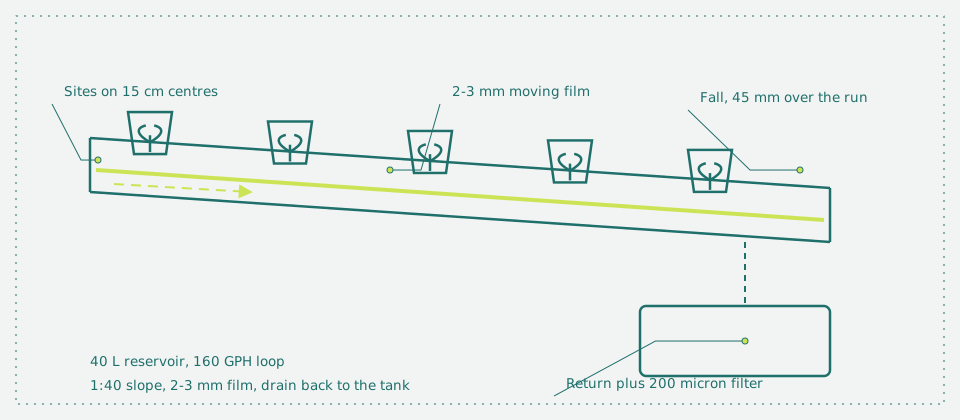
NFT Lettuce Rail: two 1.8 m channels, 24 plants, 30 days from plug to plate
Nutrient film technique runs a shallow film of solution down a sloping channel while the roots sit in the humid dark above it. It is the most efficient way to grow lettuce at home but it…
Open the manual → - Build manualDutch bucketFruiting cropsIntermediate
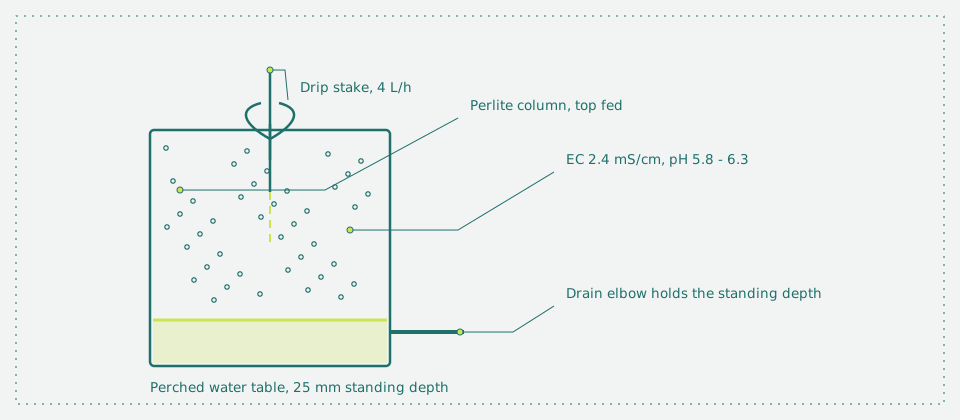
Dutch Bucket Tomatoes: two indeterminate plants, 60 L of reservoir, 17 weeks of harvest
Dutch buckets are the standard commercial layout for greenhouse tomatoes and peppers, and they scale down to two plants without losing what makes them work: a drain elbow that creates a p…
Open the manual → - Build manualKratky still waterHerbsBeginner
Kratky Herb Jars: three 1 L windowsill jars that beat a supermarket pot by week six
A supermarket herb pot costs more than the whole setup described here and dies in ten days. Three opaque mason jars, a bag of clay pebbles and one bottle of nutrient will produce cut mint…
Open the manual → - Build manualDeep water cultureSoft fruitIntermediate
DWC Strawberry Tower: 18 plants in 1.6 m of column, on a 30 L reservoir
A vertical DWC tower fits eighteen strawberry plants into the footprint of a single bucket, which is the only reason it makes sense on a balcony. What makes or breaks it is port geometry:…
Open the manual → - Build manualKratky still waterMicrogreensBeginner
Kratky Microgreen Tray: sunflower and radish in 12 days on 8 mm of solution
Microgreens are the fastest thing you can grow hydroponically and the easiest to ruin with kindness. The whole cycle is twelve days, the reservoir is 8 mm deep, and almost every failure c…
Open the manual →
Nutrient chart
- Nutrient chartLeafy greens
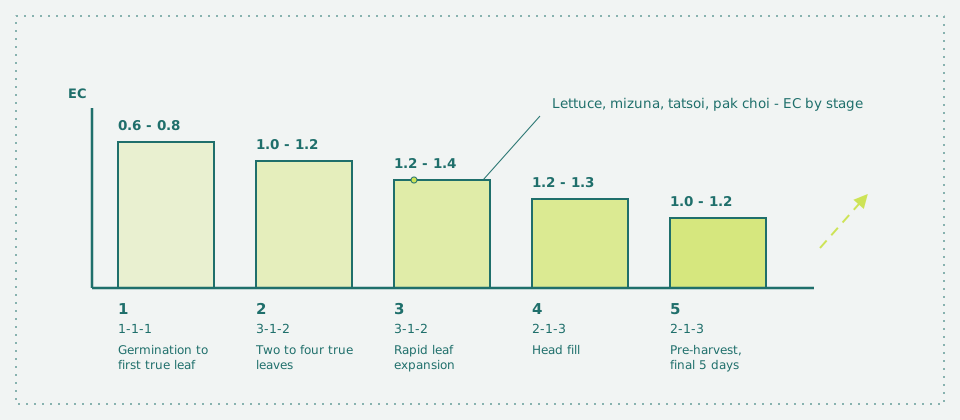
Leafy Green EC and pH Chart by Stage: lettuce, mizuna, tatsoi, pak choi
Leafy greens are the most forgiving group in hydroponics but they are not uniform: lettuce wants a moderate charge, brassica greens want more nitrogen, and every one of them punishes you…
Open the manual → - Nutrient chartHerbs
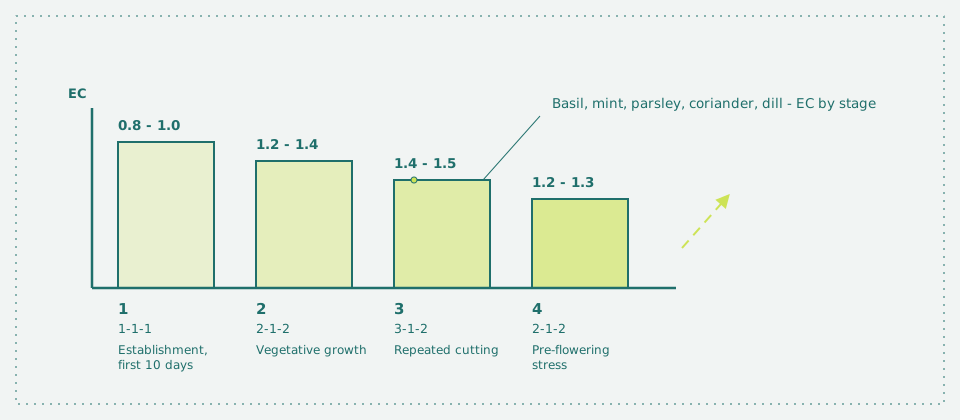
Soft Herb EC and pH Chart by Stage: basil, mint, parsley, coriander, dill
Soft herbs are light feeders compared with fruiting crops, but they are the group where overfeeding does the most visible damage: burnt leaf margins, tough texture, and a flavour that tur…
Open the manual → - Nutrient chartFruiting crops
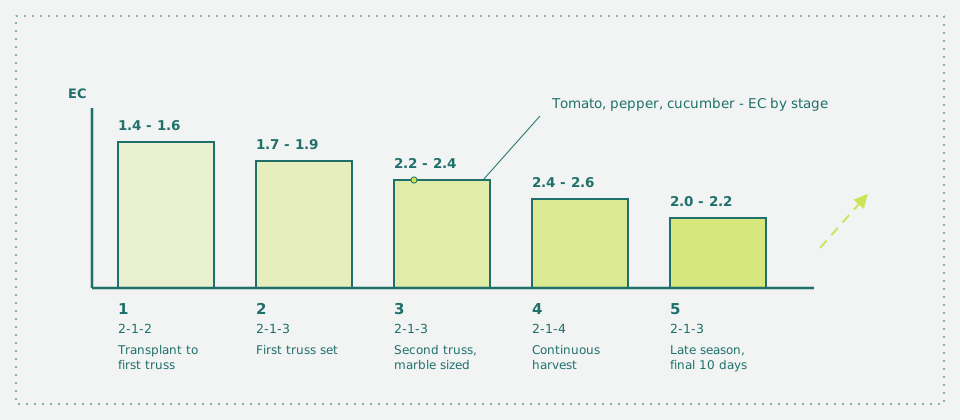
Fruiting Crop EC and pH Chart by Stage: tomato, pepper, cucumber
Fruiting crops are fed on a curve that rises through the season, and almost every home failure comes from applying the peak value too early or jumping to it in a single step. The stage ma…
Open the manual → - Nutrient chartMicrogreens
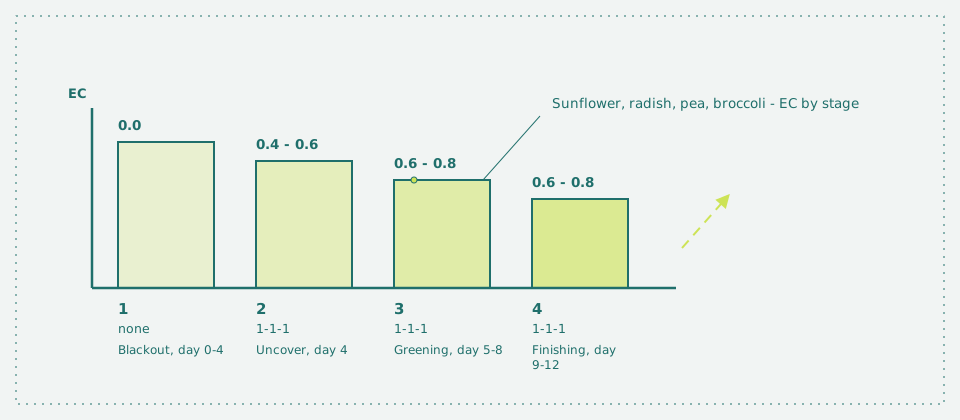
Microgreen EC and pH Chart: 12 days on almost no nutrient at all
Microgreens are the only hydroponic crop where the correct nutrient answer is close to none. The seed supplies everything the plant needs for the whole cycle, and the reservoir exists mai…
Open the manual → - Nutrient chartLeafy greens
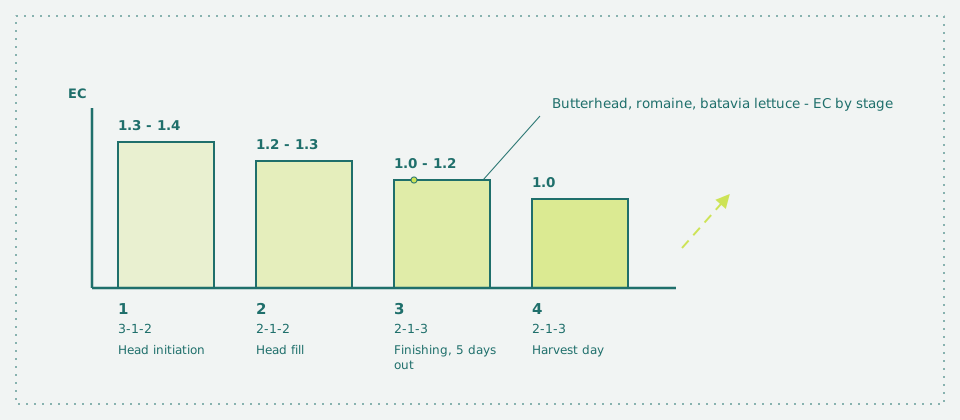
Lettuce Head Finish Chart: what changes in the last ten days
Most lettuce guides stop at the vegetative stage. The final ten days are where tipburn appears, where shelf life is won or lost, and where the plant's nitrogen demand changes direction co…
Open the manual →
Maintenance calendar
- Maintenance calendarPassive systems
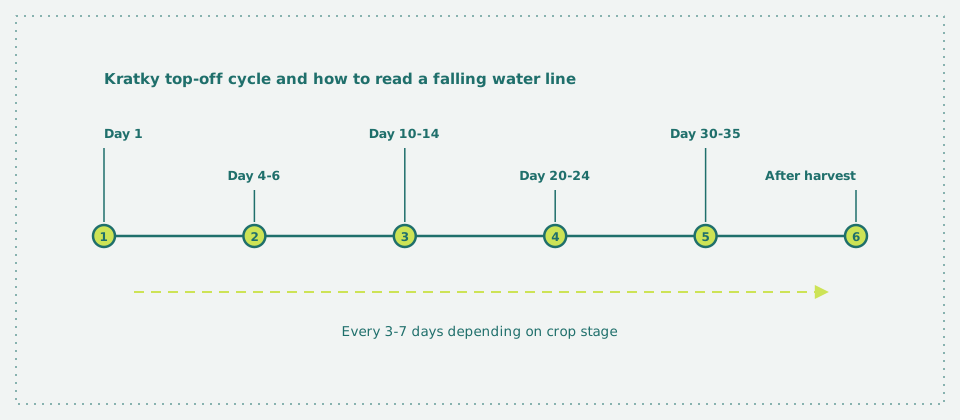
Kratky Top-Off Calendar: what to do on days 1, 14, 24 and 35
A passive bucket looks after itself, which is exactly why it goes wrong silently. There are only four moments in a five-week cycle where you have to do anything, and three of them are top…
Open the manual → - Maintenance calendarPumped systems
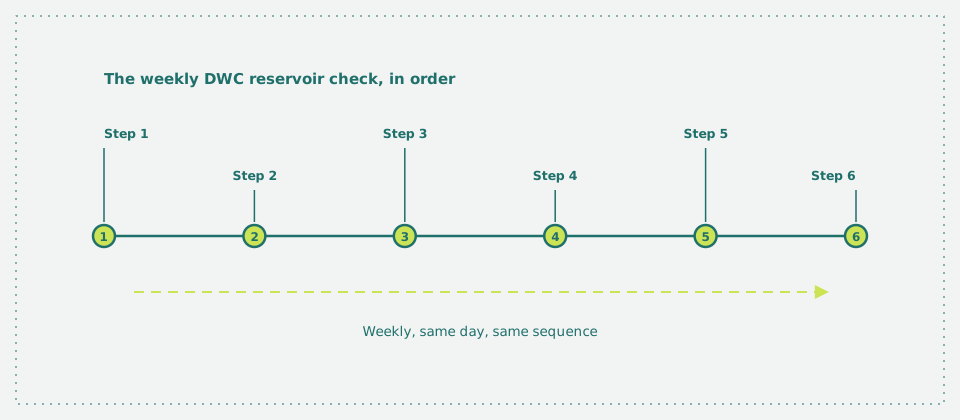
The DWC Weekly Log: six steps in the only order that gives you usable data
A weekly reservoir check takes four minutes and produces six numbers. Done in the wrong order it produces numbers that describe the water you just poured in rather than the water the plan…
Open the manual → - Maintenance calendarPumped systems
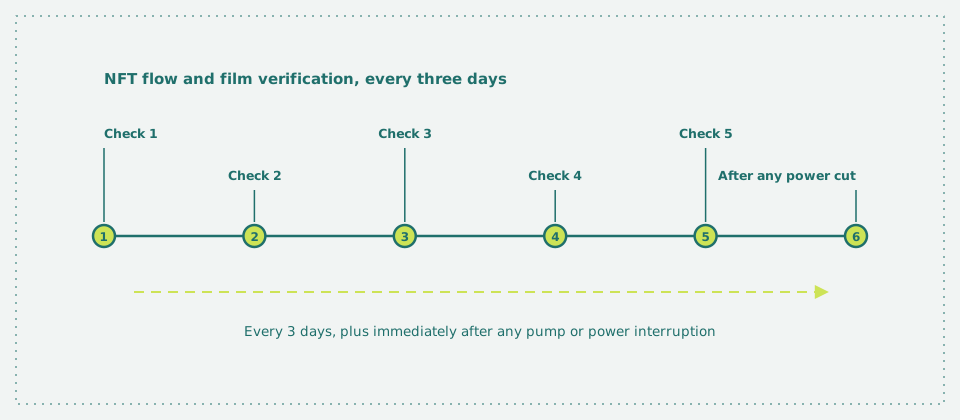
NFT Flow Check: five things to verify every three days
An NFT system has a very small buffer. The plants live on a film of water a few millimetres deep, and anything that changes the hydraulics of that film changes the crop within hours. A th…
Open the manual →